














- A primary barrier to scaling AI in the telecoms sector is data fragmentation caused by decades of disjointed OSS/BSS investments and M&A hangover.
- Event-driven architecture (EDA) offers a solution by streaming data in real-time without necessitating immediate costly decommissioning of legacy IT systems.
- A TM Forum Catalyst project demonstrates how telcos can use EDA to monetise complex ecosystems by translating legacy REST calls into actionable data streams.
- Appledore Research projects the global agentic AI market in telecoms will grow to $6.2bn by 2030, with early use cases like customer care already delivering tangible ROI.
- To succeed, operators must enforce data sovereignty and establish strict deterministic guardrails around probabilistic AI agents.
“Is OSS/BSS dead?”
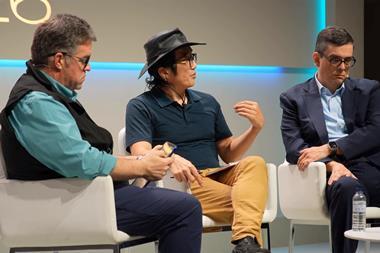
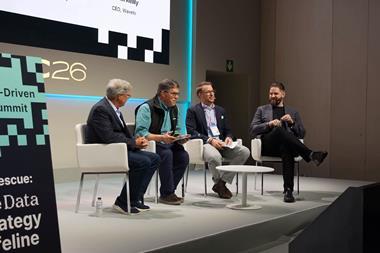
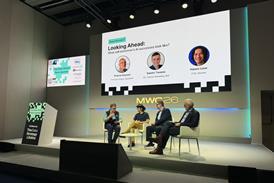
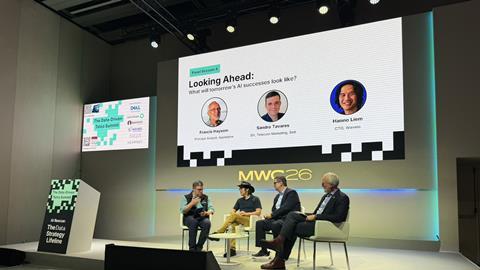
This was the question that telecoms experts debated at The Data-Driven Telco Summit, a Wavelo -sponsored side event at Mobile World Congress 2026.
With AI on every stand, the Summit cut through the noise to ask a harder question: do telcos have the data infrastructure to do anything meaningful with it?
Analysts, operators and technology players across four sessions argued that the answer depends less on AI itself than on whether operators can finally unlock the data sitting inside their own systems.
Moderated by TelcoTitans’ Matt O’Leary, the Summit drew on perspectives from Appledore Research, ARQIA, Ciminko, Dell, Kearney, and Wavelo.
The problem is data
“There are great ideas in telcos about AI, but it often actually lacks a unified vision or North Star”, said Christoph Neunkirchen, Partner and Managing Director at Kearney, during the summit’s opening panel. “That, together with very siloed organisations, forms an inability to actually scale and to succeed in AI”.

This is something that trickles down also into the number-one constraint when it comes to executing on AI for telcos: data readiness and data integration… Data, especially in OSS/BSS, is typically fragmented and difficult to access.
A pulse-check of European telco CEOs conducted by Neunkirchen at MWC found data readiness was the single most-cited constraint — and that several operators reported needing ten to twelve months to launch a new product, constrained entirely by legacy IT. “I just can’t differentiate my pricing”, was how one CEO summarised the position.
As consolidation accelerates across telecoms globally, it becomes harder to ignore technology fragmentation, said Wavelo’s CEO, Justin Reilly. This is especially evident in private capital-led consolidation, where investors may identify construction, revenue, or back-office finance synergies, but are then stymied when they find that the technology layer is completely fragmented.
Reilly recalled a recent discussion with an operating partner at a leading private equity firm: “They bought two companies last year that each had $200mn to $400mn system spends, and they had not a single system that overlapped”.

You have to be really thoughtful about ‘what’s your moat?’, ‘where’s the data?’, and ‘are you going to play nice in the sandbox?’, so that… you’ve got interoperability for agents and you’re letting anyone ride on those rails.
In a case like this, even basic interoperability becomes difficult, and data typically stays locked inside disconnected platforms. The pattern is worsening as convergence accelerates. Combining fibre and mobile assets makes common systems even less likely.
The historical reasons for this are well documented. John Abraham of Appledore Research noted that the problem accumulated over decades of compartmentalised transformation, where best-of-breed purchasing decisions left integration as an afterthought, compounded by M&A. By some estimates, roughly two-thirds of total annual OSS/BSS spend now goes on maintaining systems that have no future, simply because decommissioning them risks disrupting live services.
TM Forum Catalyst: bridging legacy OSS/BSS and AI-native operations
Wavelo has been participating in an ongoing TM Forum Catalyst, Autonomous and sustainable moving IoT ecosystems, which has now advanced to Phase III as a collaborative industry proof of concept. This has brought together operator Champions (BT, DISH, and Mascom) and technology Participants (CGI, NTT DATA, Ribbon, and Wavelo).
This is demonstrating how telcos can adopt EDA without abandoning decades of OSS/BSS investment. Across all three phases, the Catalyst has focused on the Internet of Moving Things (IoMT), specifically drones deployed for port surveillance and security.
In the first phase, the team experimented with making asynchronous systems behave like traditional synchronous ones so they would feel familiar to operators. Due to being technically asynchronous, this approach limited the benefits of true event-driven design, explained Ciminko’s Koenraad Peeters, a longtime contributor to TM Forum’s work on asynchronous APIs.
This insight led to a second phase focusing on brownfield technology environments.
This iteration explored how the two worlds can coexist — legacy REST calls translated into events, events translated back into REST — so that OSS and BSS systems become participants in an event-driven ecosystem without requiring wholesale replacement.
“Your event bus becomes your source of truth for everything that’s happening within the organisation”, Peeters explained. Legacy applications continue to operate, but they now publish and consume state changes through a shared, standardised event stream that is also accessible to AI agents.
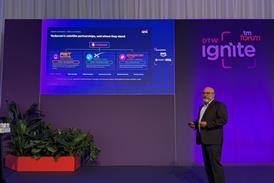
The third phase, demonstrated at TM Forum’s DTW Ignite, focuses on helping telcos monetise IoMT coordination across ordering, orchestration, assurance, telemetry, and billing.
“We’re bringing together business-level information like service orders and monetisation with all the telemetry data coming in from the drones, and orchestrating that end-to-end through event streams”, explained Bob Dietrich, Director of Solutions Engineering at Wavelo.
In this phase, network slicing, edge orchestration, usage charging, and sustainability optimisation are all triggered dynamically as conditions change. The aim is to show how telcos can create monetisable offerings that go beyond connectivity, enabling them to act as orchestrators of intelligent IoT ecosystems.

No telco is greenfield: most actually have lots of legacy applications, and you’re going to have to live with both worlds for a long time.
Use cases: from the field
While the TM Forum Catalyst demonstrates how EDA can modernise OSS and BSS without disrupting existing operations, its learnings extend beyond internal systems.
Sandro Tavares, Director of Telecom Systems Marketing at Dell, highlighted a real-world example developed with AT&T, Khasm Labs, and the City of Bellevue, Washington, to illustrate how data-driven architectures translate into tangible outcomes.
The city was experiencing traffic congestion and accidents because of inefficient signal timing. Working with an AI software partner, the group built a solution to ingest and process terabytes of daily data from traffic cameras and analyse it in real time. The AI system uses these insights to adjust traffic signals dynamically.
For example, if the system detects someone likely to cross the street late, the traffic signal is extended. The result has been fewer traffic jams and a measurable improvement in pedestrian safety. This traffic-management example “may be quite simple, but that shows how these technologies can help not only the high-tech industry, but actually everybody that is walking out on a street”, Tavares said.
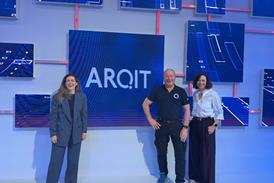
ARQIA, a Brazilian MVNO with four million IoT and machine-to-machine customers operating across automotive, energy, and smart infrastructure sectors — and now part of international IoT connectivity platform Wireless Logic — offered a view from the field. “The really profitable data is on IoT”, said Eduardo Ázara, ARQIA’s Business Development Manager.
The IoT specialist has built its differentiation around combining complex, disparate data into dashboards that not only help manage devices in the field but provide insights that can be shared directly with customers.
Quantifying the opportunity
“A trillion dollars will be spent on this [global AI] market this year, just in building out the infrastructure. So, the question on everybody’s mind is: how do I monetise this?”, said Appledore’s Kelly, “because it’s a massive capital investment: three times what all the telco operators in the world spend”.
While the market for AI-driven agents in telecoms is still nascent, it is beginning to move beyond experimentation as operators shift to production deployments in areas with clear and near-term cost benefits. Kelly pointed to customer care as an early example: call deflection enabled by AI agents is already being deployed by several tier-one operators, delivering savings measured in tens of millions of dollars.

It’s that semantic reasoning that becomes the foundation for this forecast. In fact, if you don’t do that, these numbers just don’t play out.
Appledore Research forecasts that the global market for agentic AI in telecommunications will grow from $92m in 2025 to $6.2bn in 2030, with revenue broken out across four segments: digital enablement; service management and operations; network security; and IT/ERP. Service management and operations represent a larger but longer-term opportunity, with deployments in areas such as RAN optimisation, root-cause analysis, anomaly detection, and field-force management expected to accelerate later this year and into 2027.
Kelly also pointed to a potentially larger prize beyond operational savings. AI-enabled infrastructure, he believes, could fuel a revitalised enterprise market. He estimated this to be worth $100bn globally over the next three to four years, which could be significantly larger than the direct agentic AI market itself.
The bigger opportunity still, he suggested, could be cost efficiencies: most telcos spend close to 80% of revenue on operating expenses, meaning even modest gains fall directly to the bottom line.
Kelly cautioned, however, that realising those gains depends on overcoming structural barriers. “For these agents to work… you need an underlying data structure; you need a knowledge graph”, he said. “You have to understand the relationship, which is not only from the network but also how the services overlay on that, and how it impacts customers”.
Conditions for success
Speed-to-value emerged as a recurring theme in the afternoon sessions.
“We’re not in the business of running science fairs”, said Sandro Tavares. His prescription was direct: define what you want to achieve, find the shortest path, execute, reap the benefits, move to the next.
Francis Peyton of Appledore Research added a structural pressure point. Average executive tenure in a relevant telco role is approximately two years, meaning any initiative that cannot demonstrate tangible benefit within that window is at real risk of being defunded before it delivers.
Each of the use cases presented pointed to another prerequisite: that telcos cannot do this alone.
Ten years ago, an operator might have attempted to build such capabilities in-house; today, the pace of development makes ecosystem partnering a condition of speed, not a preference. The TM Forum Catalyst, the Bellevue deployment, and ARQIA’s IoT dashboards all involved multiple technology partners working within shared frameworks.
The shift to real-time AI decision-making also introduces new risk.

There’s a lot of opportunities to train our own models as well. The data that flows out of OSS and BSS systems are very rich… From there, you can drive that to make really good decisions and do that in a really auditable way.
Wavelo’s Hanno Liem drew on experience running AI agents in controlled environments to argue that systems must “split the intelligence from the authority” to keeping the probabilistic reasoning of AI separate from the deterministic guardrails that govern what it can actually do. In a regulated industry where AI actions must be auditable, this distinction is not an implementation detail but a design requirement.
Data sovereignty — a consistent theme across MWC26 — also surfaced in Q&A.
Liem noted that EDA’s stream-based architecture lends itself to sovereignty requirements: event streams can be branched geographically, with data stored and processed only within specified jurisdictions. For European operators facing regulatory pressure on data localisation, this is a practical rather than theoretical advantage.
Looking ahead
Asked whether AI poses an existential threat to telecoms software, Reilly argued that it is exposing weak points in how systems are designed rather than rendering telecoms software obsolete.
Closed, workflow-centric systems are increasingly vulnerable as AI lowers the cost of rebuilding interfaces and automating processes, but platforms with rich customer and network data that sit deeper in the stack retain more enduring value.
Patrick Kelly of Appledore Research was sceptical about claims of total disruption in the telecoms software market. While AI will change how OSS and BSS are built and operated, he argued that it will be difficult to displace incumbents steeped in deep domain expertise. “If you look at companies like Nokia and Ericsson, they have a lot of domain expertise”, said Kelly, “so, that’s a pretty strong moat; they have tribal knowledge, they’ve built this into their products”.
Perhaps the sharpest observation of the day came from Wavelo’s Liem, surveying a landscape of rapidly advancing technology and organisations still finding their footing — “the next few years are not going to be gated by how fast technology moves, but by how fast organisations can move”.
With data infrastructure to support agentic AI in telco either available or becoming so, the key question for operators (as well as for vendors and investors) is whether they can free themselves of their complex organisational challenges so that they can fully embrace the opportunity.
What is EDA and how can it help?
Event-driven architecture (EDA) is a way to solve the challenges operators are facing.
Instead of relying on vast centralised relational databases pooling data from silos, EDA streams data to provide real-time access and intelligence at scale.
Each source application ‘publishes’ event data to a shared event ‘stream’, which also acts as a historical event log that becomes the system of record. Other applications then ‘subscribe’ to relevant events, acting on these as they occur, with no querying of a costly and cumbersome central database.
Platform companies like Netflix and Uber pioneered EDA in their efforts to move away from traditional request-response systems, building situationally-aware platforms capable of processing billions of events in real time. Hardened technologies such as Kafka underpin this approach on the transport mechanism, while asynchronous APIs expose event streams in a way that enables real-time, AI-ready data access.
Wavelo distinguishes itself by industrialising EDA for high-performance telco-specific environments, such as embedding a more deterministic and predictable approach to data-streaming, providing a coordination layer optimised for multi-system challenges (including targeting endemic points of operational failure), and making legacy siloed transactional data AI-accessible.
“Telecoms already lives in an event-driven world. There are already state changes being propagated in a variety of different ways”, said Wavelo CTO, Hanno Liem. “EDA is a really good architecture to do that in real time, and that intersects really nicely with… the agentic world”.
Through its Notification and Temporal workflow orchestration engines, Wavelo wraps event-streaming infrastructure with telecom-native capabilities, such as ontology and semantic background, TM Forum Open API integration (with REST API translation), lifecycle awareness and governance (including selective rewind and replay), and auditable streams. The inherent ability to coexist with in-situ and legacy OSS/BSS also positions the solution to de-risk as well as assist modernisation and automation.
Historically, machine learning and big data analytics involved collecting data and processing it later. Agent-based systems require decisions and actions to happen in real time, however, plus, in a highly regulated industry like telecoms, actions taken by AI agents must also be auditable. EDA enables both.
Topics
- AI/GenAI/ML (artificial intelligence, agentic, machine learning)
- API
- Appledore Research
- Architecture
- AT&T
- Autonomous networks (zero-touch)
- Bob Dietrich
- Brazil
- BSS/OSS
- BT Group
- Christoph Neunkirchen
- Data
- Dell
- Denmark
- DTW Ignite (TM Forum)
- EchoStar (Boost/Dish)
- Eduardo Ázara
- Ericsson
- Europe
- Events
- Francis Peyton
- Hanno Liem
- Infrastructure
- IoT (Internet of Things, M2M)
- John Abraham
- Justin Reilly
- Kearney
- Koenraad Peeters
- Matt O’Leary
- Mergers and Acquisitions (M&A)
- MWC (GSMA Mobile World Congress)
- Nokia
- NTT DATA
- Patrick Kelly
- Ribbon (Genband/Sonus)
- Sandro Tavares
- Spain
- Strategy & Change
- Thought Leadership
- TM Forum (TMF)
- Wavelo
The Data-Driven Telco Summit 2026
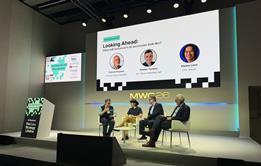
Hosted by TelcoTitans and sponsored by Wavelo: four panels examining the telecom industry’s readiness for AI
 Currently
reading
Currently
reading
Overcoming the OSS/BSS bottleneck: telcos’ AI transformation needs an event driven architecture
- 2
- 3
- 4
- 5