

























- Ericsson and AWS are collaborating to deliver intelligent telecom charging and billing operations that enhance operational performance, with integrated agentic AI, digital twins, and predictive analysis tools collectively redefining systems as proactive, not reactive.
- The partnership is illustrative of a broader, non-exclusive, strategic alliance to create replicable, scalable use cases, blending Ericsson sector expertise in OSS/BSS with AWS cloud, data, and AI capabilities.
- Production deployments, such as Odido migrating more than five million customers in the Netherlands, demonstrate that public cloud billing enables faster bill runs.
- Specialised generative agents target legacy modernisation bottlenecks to compress transformation cycles by up to 70%.
- Industry research points to growing demand for AI-enabled automation and coordinated modernisation of cloud, data, and OSS/BSS processes, noting that this unified approach takes precedence over abstract network autonomy.
Charging and billing sit at a critical junction between telecom networks, customers, and revenue. The platforms can process millions of transactions each day across distributed operations, with errors or capacity problems risking service disruption and lost income.
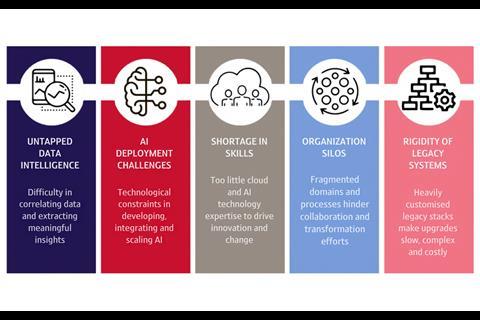
These systems can be burdened by years of accumulated products, interfaces, and configuration at a time when communications service providers (CSPs) face pressure to introduce services faster and manage complex environments more proactively. This means modernisation cannot just address the underlying platform but must also improve how operations and business support systems (OSS/BSS) perform, including supporting commercial outcomes.
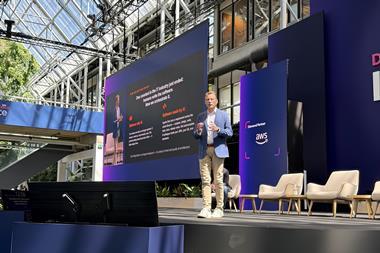
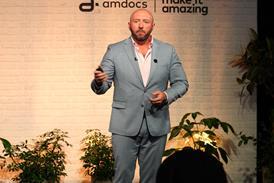
At DTW Ignite, Adin Seskin, AI First Engagement Director at Ericsson, demonstrated to TelcoTitans how the vendor is approaching the challenge through its intelligent charging and billing operations application. Developed in collaboration with Amazon Web Services (AWS), this combines specialised agents, predictive analysis, simulation, and natural-language interaction to help CSPs anticipate demand, investigate system conditions, detect anomalies, and simplify legacy transformation.

“ Fundamentally, what we’re trying to do is ensure that there is never any revenue loss. We want to move away from reactive operations towards a much more proactive way of working. ”
The demonstration also provides a window into the wider Ericsson-AWS collaboration and its efforts to move agentic use cases beyond isolated pilots into repeatable deployment.
Enabling proactive operations
Ericsson’s architecture combines predictive analytics and simulation with specialised AI agents for operational knowledge retrieval, topology analysis, monitoring, and capacity planning.
Operations teams interact with the environment through a natural-language interface that can answer questions, analyse system conditions, and provide recommendations. The agents can work in digital twin environments to simulate anticipated conditions and assess proposed operational changes before they affect production systems. Recommendations can be reviewed and tested against grounded operational data before authority is extended from analysis to execution.
“ Digital twins are part of that: prove to me that the decisions you’re about to take are very likely to be safe. ”
Seskin.
In the demonstration for TelcoTitans, a CSP asked whether the charging environment was prepared for a peak in demand anticipated around New Year. Specialist agents examined the deployed topology, modelled the expected transaction load, and assessed available capacity within a simulated scenario. The analysis could highlight potential pressure points and recommend where additional capacity or configuration changes might be required.
Leveraging AWS’s cloud and AI foundation
The collaboration extends across Ericsson’s OSS/BSS portfolio, with AWS services supporting the industrialisation and scaling of selected cloud and AI use cases.
Within Ericsson’s OSS/BSS framework, Amazon Bedrock and Amazon Bedrock AgentCore provide support for generative and agentic AI. Other AWS services support grounded information retrieval, demand forecasting, data processing, and graph-based analysis of system topology and dependencies.
Inside the agentic stack
- Amazon Bedrock: provides access to AI foundation models used by generative and agentic applications.
- Knowledge Bases for Amazon Bedrock: grounds agents in relevant business, product, and operational information.
- Amazon Bedrock AgentCore: supports deployment, operation, and management of agents beyond development.
- Amazon SageMaker: machine-learning capabilities for forecasting and predictive analysis.
- Amazon Neptune: represents topology, relationships, and dependencies as graph data (helping agents understand how components are connected).
- AWS data services: store, process, and stream historical and current data used by analytical and agentic workflows.
For Ericsson, “industrialising” with AWS means making those components manageable and reusable beyond individual proofs of concept. Ericsson then applies them to charging, billing, and other revenue-critical telecom processes.
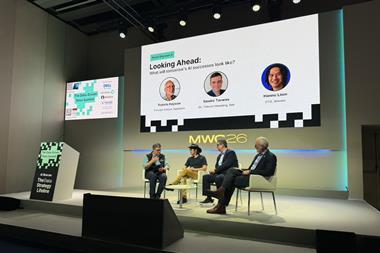
“Working with AWS helps us industrialise and speed up”, said Mats Karlsson, Vice-President and Head of Solution Area Business and Operations Support Systems at Ericsson, during an AWS Studio discussion at MWC 2026 with Fabio Cerone, General Manager for EMEA Telco at AWS.
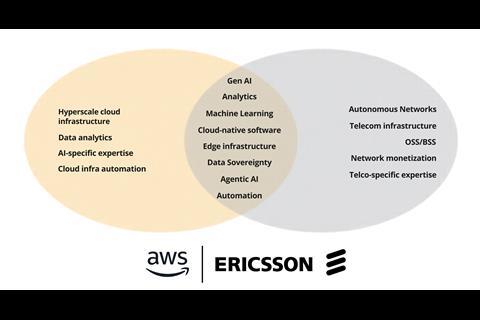
Cerone characterised the split in capabilities as extending through the technology stack.

“ We bring the intelligence all across the stack, from the silicon to the agentic AI development environment, and what Ericsson delivers on top of this stack is the domain expertise. This combination makes this partnership really powerful. ”
In Ericsson’s formulation, the partners’ respective strengths “marry magnificently”: AWS provides the cloud and AI foundations, while Ericsson applies its telecom software and domain expertise to CSPs’ revenue-critical processes.
The relationship is strategic rather than exclusive, however, with Ericsson’s OSS/BSS software and AI platforms designed to remain cloud-agnostic, and deployment options spanning CSP premises, private and public cloud, and hybrid environments, including support for other major cloud providers.
From efficiency to business outcomes
Ericsson places the billing and charging work within its broader, outcome-led OSS/BSS strategy.
Karlsson describes this as “no-nonsense” OSS/BSS moving beyond individual products and technology-led transformation to focus on three essentials for CSPs, “Sell. Deliver. Get paid.”.
Commerce capabilities support the creation and sale of services, orchestration manages their delivery, and monetisation platforms ensure that usage can be charged and billed. Cloud, data, and AI increasingly connect and automate the processes across that chain.
The same architecture can also support product creation and monetisation. Ericsson’s product configuration assistant gathers business requirements conversationally, automating conversion into product offerings and configuring the products in revenue management and product catalog systems, creating a more direct route from idea to chargeable offer.
“ You can effectively go from an idea through to catalogue-driven charging and billing extremely rapidly. ”
Seskin.
Ericsson’s Business Value Pathways extend the outcome-led approach across product launch, service experience, IT operations, and data transformation. Rather than treating autonomy as an end in itself, the emphasis is on using cloud and AI to launch services faster, improve customer experience, protect revenue, and reduce operational effort.
At production scale: Odido moves to Ericsson Billing on AWS
The cloud-native billing model is already operating at production scale.
Dutch CSP Odido consolidated consumer and enterprise mobile billing on Ericsson Billing hosted on AWS, replacing heavily customised legacy systems that constrained product introduction and increased the complexity of supporting new services.
Working with Ericsson, AWS, and systems integrator Wipro, the CSP migrated five million customers in one weekend in August 2024, following rehearsals with live data, and reported no errors. The results extend beyond the migration, with standard bill runs now completing 30% faster and complex B2B bill runs up to five times faster.

“ It was important for us to think about a cloud-ready solution, but the most important factor… strategically was to help monetise our 5G investment. ”
Purdy said the established Ericsson-AWS relationship and their ability to work with Wipro around a shared outcome was important to Odido’s decision, along with the scalability, security, and resilience of public cloud.
Elsewhere, UK mobile brand giffgaff has migrated Ericsson Mediation to AWS to support scalable data processing, while Bangladesh’s Grameenphone is using the partners’ Gen-AI Lab to automate stages of legacy product-catalogue migration.
Making legacy manageable
Accelerating new offers is only part of the challenge: CSPs must also simplify years of accumulated product, interface, and configuration complexity.
Product catalogues can grow organically, accumulating similar offers and older products serving relatively small customer groups. Before migration, CSPs must determine which products remain in use, how they differ, and whether some can be consolidated rather than recreated individually.
Ericsson is applying AI agents to analyse catalogue structures and dependencies, identify opportunities for rationalisation, and help CSPs avoid transferring unnecessary complexity into a new environment.
Agents can also examine documentation for legacy interfaces and target APIs based on TM Forum standards, map the relationships between them, and support the generation of bridging components. Multiple older interfaces may be consolidated into a single API rather than reproduced individually.
More broadly, Ericsson estimates that agentic capabilities can compress the time required for assessment, migration, configuration, and testing by between 30% and 70%, depending on the activity and its complexity.
The use cases suggest that the nearer-term value of agentic OSS/BSS will be measured less by autonomy as an abstract destination than by whether CSPs can introduce services, modernise systems, and resolve operational problems more quickly and reliably.
Analyst view: cloud, data and AI converge
Research commissioned by Ericsson and AWS identifies AI-enabled automation, cloud-native architecture, and coordinated modernisation of infrastructure, data, and processes as recurring priorities.
-
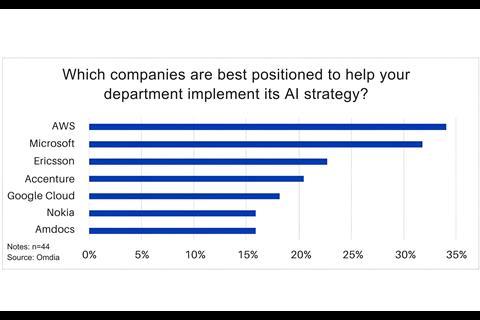
Omdia found that more than two-thirds of its survey respondents identified leveraging AI for automation as their leading OSS/BSS priority, with root-cause analysis the most important AI use case. In a separate question, AWS ranked first among companies considered best positioned to support telco AI strategies, on 34%, while Ericsson ranked third on 23%.

-
Analysys Mason argues that cloud migration, data transformation, and AI adoption must advance together. Its recommendations include common infrastructure across OSS and BSS, secure data pipelines spanning network and business domains, rationalisation of legacy systems, and a phased start with high-impact, lower-risk workloads.

-
Appledore Research adds the partnership context, describing the Ericsson-AWS collaboration as a “reference point” for combining complementary cloud, AI, and telecom capabilities.

Topics
- 5G
- Adin Seskin
- Africa
- AI/GenAI/ML (artificial intelligence, agentic, machine learning)
- Amazon
- Apax Partners
- Automation
- Autonomous networks (zero-touch)
- AWS (Amazon Web Services)
- Billing (charging)
- BSS/OSS
- Data
- Data centre
- Data science (analytics)
- Digital twin
- DTW Ignite (TM Forum)
- Ericsson
- Europe
- Events
- Eventwatch
- Fabio Cerone
- Infrastructure
- Mats Karlsson
- Microsoft
- Middle East
- Netherlands
- Network
- Odido
- Operators
- Public Cloud
- Revenue (income)
- Robert Purdy
- System integration (SI)
- Tech & IT
- Technology
- Tele2
- Thought Leadership
- TM Forum (TMF)
- T-Mobile Netherlands
- Warburg Pincus
- Wipro